
What Is a Solar PV System Upgrade?
A solar PV system upgrade is any work that improves or extends an existing solar installation rather than replacing it outright. The most common upgrades are adding more panels to use spare roof space, fitting optimisers or microinverters to overcome shading, pairing the system with a battery, and adding a hot-water diverter or solar-aware EV charger so less generation is exported for a low price.
Many systems fitted a decade ago were sized for a household that has since changed — there may now be an electric car on the drive, a heat pump in the garden or people working from home. An upgrade builds on the existing panels and wiring, which is usually much cheaper than starting again.
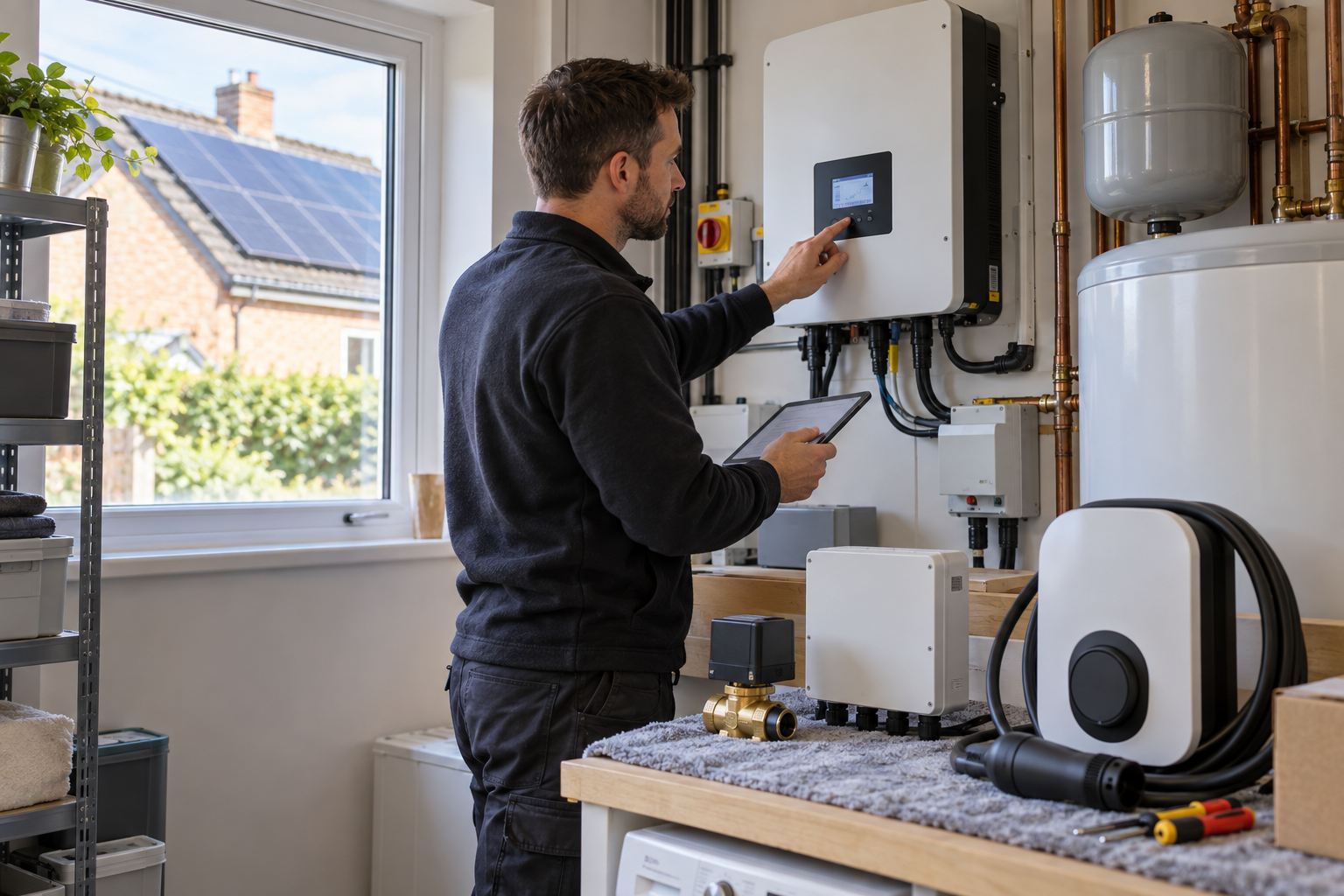
Signs Your Solar System Needs an Upgrade
- Your electricity use has grown since the system went in, for example because of an electric car or heat pump
- There is unused roof space, often an east or west slope that was left out of the original design
- A tree, chimney or new extension now shades part of the array and pulls down the whole string
- You export a lot of electricity in summer and would rather use it for hot water or car charging
- The monitoring on your older system is limited or no longer works, so you cannot see what it is doing
Solar Upgrade Options Explained
- Adding panels — extra panels can go on unused roof space, usually as a separate string with its own inverter or on a new hybrid inverter. If you receive Feed-in Tariff payments, an extension is normally metered and registered separately so the original tariff is protected; the new part needs suitable certification, normally MCS or equivalent, for Smart Export Guarantee eligibility in Great Britain.
- Optimisers and microinverters — panel-level electronics let each panel work independently, so shading on one does not drag down the rest. They can be retrofitted to existing panels, but need roof access.
- Battery pairing — adding battery storage, either AC-coupled or via a hybrid inverter. See our solar battery storage page for more detail.
- Diverters and EV integration — a solar diverter sends surplus generation to an immersion heater in your hot water cylinder, while a solar-aware EV charger can charge the car from excess generation instead of exporting it.
- Monitoring upgrades — replacing an old display or dead data logger with modern app-based monitoring so you can see generation, export and consumption.
What to Include When Asking for a Quote
Dig out the original handover pack or MCS certificate: it lists the panel model, number of panels, inverter and installed capacity, and tells an installer immediately what they are building on. Say whether the system receives Feed-in Tariff or Smart Export Guarantee payments, because protecting a FiT income changes how an extension must be designed and metered.
Explain what has changed and what you want the upgrade to achieve. "More generation in winter", "use more of what we already generate" and "stop the chimney shading the array in the afternoon" lead to very different recommendations — extra panels, a battery or diverter, and optimisers respectively. If you have an electric car, heat pump or hot water cylinder with an immersion heater, mention it along with the car charger model.
A good upgrade quote explains how the new equipment will connect to the old: whether the existing inverter is kept, how new panels will be strung, whether the combined inverter capacity triggers a G99 application to the network operator, and what happens to the original warranties. It should also include an estimate of the extra generation or self-consumption expected, so you can judge whether the upgrade is worth the cost.
How Much Does a Solar PV Upgrade Cost?
| Upgrade | Typical cost |
|---|---|
| Solar diverter or monitoring upgrade | £500 – £1,000 |
| Optimisers retrofitted to an existing array | £1,000 – £2,500 |
| Extra panels on a new string, with scaffolding | £2,500 – £6,000 |
Upgrades that combine several items — for example extra panels and a hybrid inverter with a battery — can exceed this range. Scaffolding is a fixed cost, so it often makes sense to do roof-level upgrades in one visit.
The Upgrade Process: What to Expect
- System review. The installer checks the existing panels, inverter, wiring and paperwork, and looks at your generation and consumption data.
- Design and recommendation. You receive a proposal that explains which upgrade will make the biggest difference, with expected gains.
- DNO paperwork. If total inverter capacity increases, the network operator is notified or asked for approval before connection.
- Installation. Roof work, new equipment and wiring are completed, with the existing system isolated safely during the work.
- Commissioning and certification. The upgraded system is tested, monitoring is set up, and new MCS and electrical certificates are issued where required.
Do I Need Planning Permission for a Solar Upgrade?
Adding panels to a house roof is normally permitted development in England under the same limits as the original installation — panels must stay close to the roof slope and below the highest part of the roof. Listed buildings, conservation areas and ground-mounted additions can need consent. Indoor equipment such as diverters, batteries and replacement inverters does not usually need planning permission. Electrical work must meet the relevant national building standards and wiring regulations, and changes to generating capacity need to be handled with the network operator.
How to Choose a Solar Upgrade Specialist
- Are they experienced in working on other companies' systems and with your existing inverter brand?
- Have they explained how the upgrade will affect your FiT or SEG payments?
- Will new panels be compatible with the existing strings, or kept on a separate circuit?
- What happens to the warranties on the original equipment?
- Is the installer MCS-certified for the technologies being added?
Ofgem explains the Smart Export Guarantee, including the certification needed to receive export payments on new capacity.
Frequently Asked Questions
Can I add more panels to my existing solar system?
Usually, yes, if there is suitable roof space. New panels are often wired as a separate string on their own or a new inverter, and the network operator must be told about the increased capacity.
Will extending my system affect my Feed-in Tariff?
It can if not handled correctly. Extensions are normally metered separately so the original FiT payments continue unchanged, and your FiT supplier must be told about the change.
What is a solar diverter?
A solar diverter sends surplus solar electricity to an immersion heater in your hot water cylinder instead of exporting it, helping to heat water for free on sunny days.
How much does a solar PV upgrade cost?
Most upgrades cost between £500 and £6,000. A diverter or monitoring upgrade sits at the lower end, while adding panels with scaffolding costs the most.