
What Is Solar Inverter Replacement?
Solar inverter replacement is the removal of a failed or ageing inverter from an existing PV system and the fitting of a new one that converts the panels' direct current (DC) into the alternating current (AC) your home uses. The inverter works harder than any other part of a solar system and contains the most electronics, so it is usually the first major component to fail — often somewhere between 10 and 15 years after installation, while the panels on the roof still have many years left.
With thousands of systems from the Feed-in Tariff era now past their first decade, inverter swaps have become one of the most common solar jobs in the UK. Replacing the inverter is almost always far cheaper than replacing the whole system, and it is a chance to fit a battery-ready hybrid model at the same time.
Signs You Need a Solar Inverter Replacement
- A red fault light, flashing error code or completely blank display on the inverter
- The generation meter has stopped counting while the panels look clean and undamaged
- The inverter repeatedly switches off in the afternoon, particularly on hot days
- A loud buzzing, clicking or hot smell from the inverter unit
- The manufacturer no longer supports the model, or has stopped trading, and a fault has appeared
- You want to add a battery and your current inverter cannot work with one
Inverter Replacement Options Explained
- Like-for-like string inverter — a modern single-phase string inverter of similar rating replaces the old one. It is the simplest and cheapest route when the system is unshaded and working well otherwise.
- Hybrid inverter — a hybrid replaces the string inverter and can also charge and discharge a battery, either immediately or at a later date. It costs more up front but avoids a second inverter if storage is added.
- Optimisers or microinverters — on arrays with partial shading or panels on different roof faces, the replacement can be an opportunity to move to panel-level electronics. This means roof access, so it is priced more like an upgrade than a swap.
The new inverter's rating and input voltage range must suit the existing strings of panels. An engineer will check the panel specification, string voltages and the original design before recommending a model; brands commonly fitted in the UK include SolarEdge, SolaX, GivEnergy, Fox ESS, Huawei and Growatt, but compatibility matters more than the name.
What to Include When Asking for a Quote
Photograph the inverter's rating label — it lists the make, model and maximum power — and the display showing any error code. Add the number and wattage of panels if you know them (the original MCS certificate or handover pack usually lists them), and whether the panels are on one roof face or split across two.
Tell installers whether you receive Feed-in Tariff or Smart Export Guarantee payments. For a FiT system, the replacement must not change the declared net capacity without your FiT supplier being informed, and the new inverter's details need recording, so it helps if the installer knows from the outset. Say too whether you want the new inverter to be battery-ready now or might add storage in the next few years.
A clear quote names the replacement inverter model, confirms it has been checked against your panel strings, and says whether new isolators, a monitoring dongle and updated DNO notification are included. It should also state whether the old inverter will be removed and disposed of under WEEE rules, and give the new inverter's warranty length — many manufacturers offer optional extensions if registered promptly.
How Much Does Solar Inverter Replacement Cost?
| Replacement type | Typical cost |
|---|---|
| Like-for-like string inverter, up to 3.68kW | £800 – £1,200 |
| Larger string inverter or battery-ready model | £1,200 – £1,700 |
| Hybrid inverter with new isolators and monitoring | £1,700 – £2,200+ |
Prices assume the inverter stays in the same location with the existing cabling reused. Moving it, replacing old DC isolators or adding optimisers on the roof will add to the cost. Check how VAT is shown, as a standalone inverter replacement may not qualify for the 0% rate that applies to new installations.
The Inverter Replacement Process: What to Expect
- Compatibility check. The engineer confirms the panel strings, voltages and existing wiring suit the proposed inverter.
- Safe isolation. The AC supply and DC isolators are switched off and the panels' DC circuits are made safe.
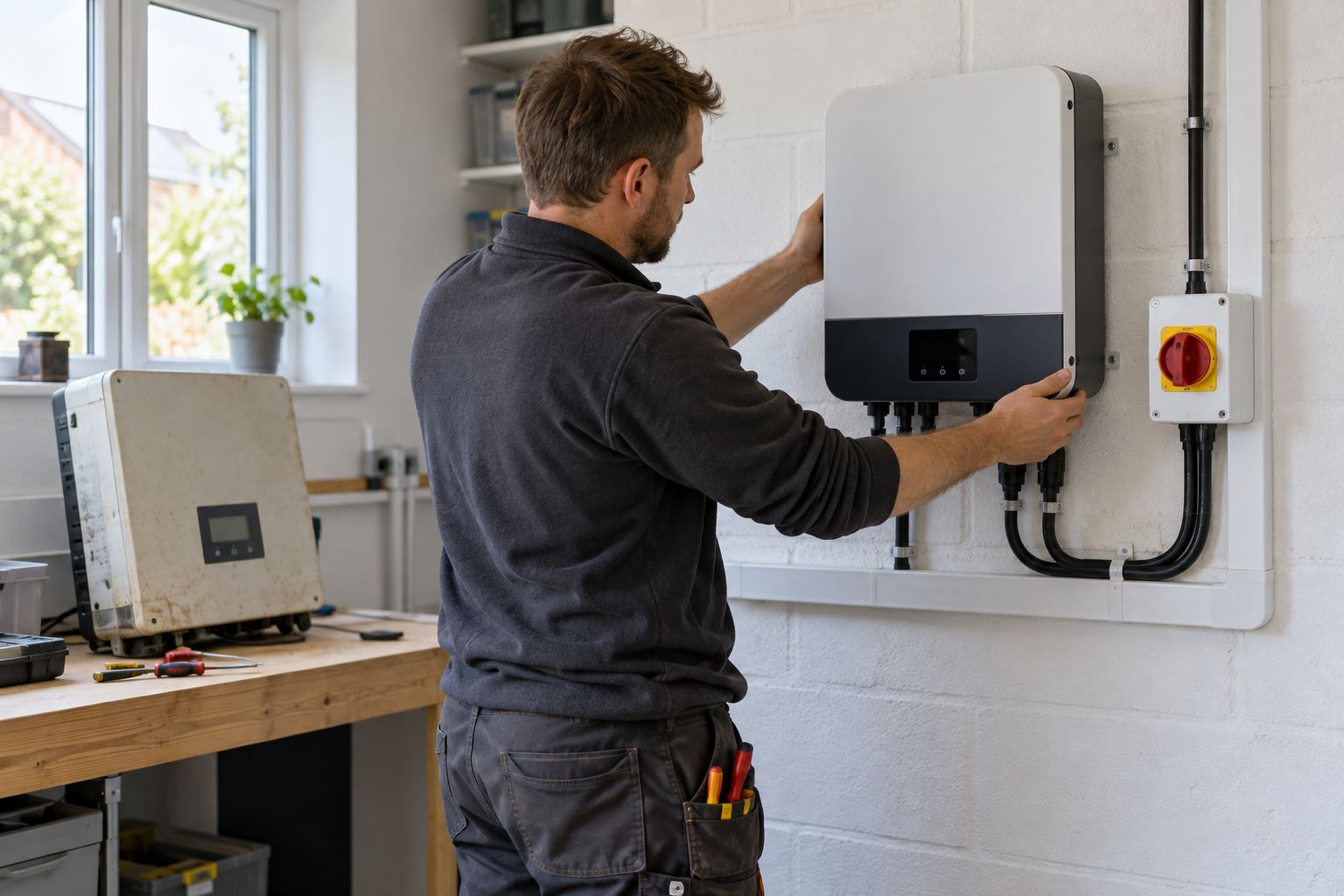
- Swap-out. The old inverter is removed, the new one is wall-mounted and the DC and AC connections are made, replacing isolators if needed.
- Commissioning. The inverter is set to the correct UK grid code, tested, and monitoring is connected to your Wi-Fi.
- Paperwork. An electrical certificate is issued, the DNO is notified of the new equipment where required, and the new warranty is registered.
Do I Need Planning Permission for an Inverter Replacement?
No. Replacing an inverter inside the home, loft or garage does not require planning permission. The work must comply with the wiring regulations and be carried out by a competent electrician who can certify it. Because the inverter is the device that connects your system to the grid, the network operator should normally be told about the new equipment under the G98 or G99 process, and the replacement must be set up to the correct grid protection settings.
How to Choose an Inverter Replacement Specialist
- Have they checked the new inverter against your specific panel strings, not just the system size?
- Will they handle DNO notification and tell you what to send to your FiT or SEG supplier?
- Does the price include removing and recycling the old unit?
- Will the new inverter be battery-ready if you want storage later?
- How long is the warranty, and will they register it on your behalf?
If you receive Feed-in Tariff payments, Ofgem has guidance for FiT generators on notifying changes to a system.
Frequently Asked Questions
How long does a solar inverter last?
Most string inverters last around 10 to 15 years. Microinverters and some newer models carry longer warranties, but the inverter is still usually the first major part of a solar system to need replacing.
Will replacing my inverter affect my Feed-in Tariff payments?
It should not, as long as the system's declared capacity is not increased and your FiT supplier is told about the new inverter. Ask the installer to provide the paperwork you need to send them.
Can I replace my old inverter with a hybrid inverter?
Usually, yes. A hybrid inverter can run your existing panels and a battery, either added at the same time or later, provided it is compatible with your panel strings.
How much does a solar inverter replacement cost?
Most replacements cost between £800 and £2,200, depending on whether it is a like-for-like string inverter or a larger hybrid model with new isolators and monitoring.