
What Are Solar Panel Repairs?
Solar panel repairs cover the diagnosis and fixing of faults that stop a PV system generating properly — anything from a scorched DC connector or tripped isolator to a cracked panel, a damaged cable chewed by pigeons or a mounting rail loosened by high winds. Unlike a new installation, the job starts with fault-finding: the engineer has to work out where in the chain between panel and consumer unit the problem lies before a price for the fix can be given.
Solar systems rarely fail loudly, so faults often run for months before anyone notices. The first sign is usually a lower bill saving, a generation meter that has stopped moving or a monitoring app showing a flat line on a sunny day.
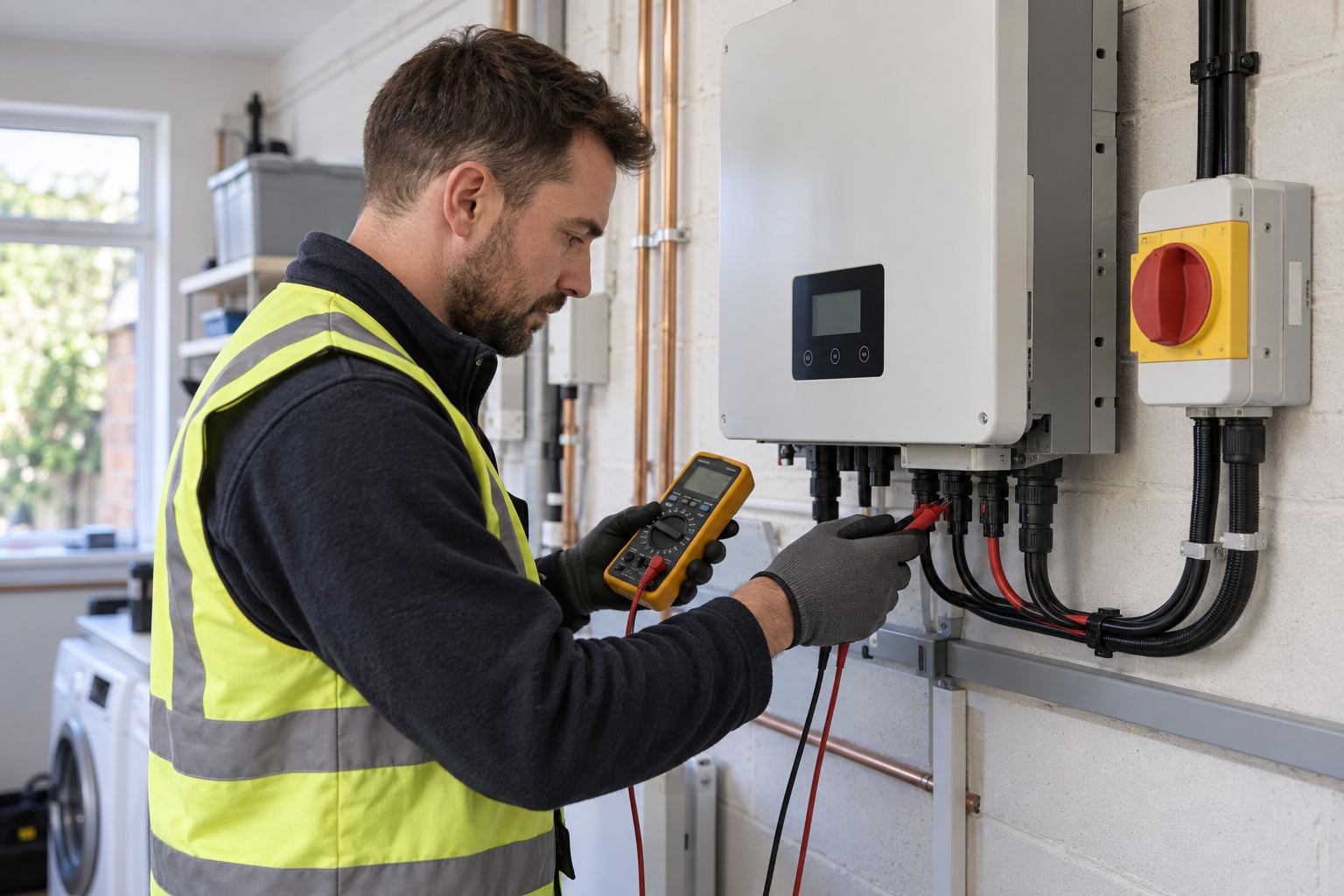
Signs Your Solar Panels Need Repairing
- The generation meter reading has not changed for days, even in good weather
- Summer output is well below the same months in previous years, with no new shading to explain it
- An isolator keeps tripping, or there is a burning smell near the inverter or loft cabling
- Visible cracks, brown scorch marks or bubbling on the face of a panel
- Panels, rails or roof tiles around the array have shifted after a storm
- Chewed or hanging cables under the array where birds or squirrels have got in
If the inverter itself shows an error code or a blank screen, see our page on solar inverter replacement — the inverter is the most common single point of failure and is often a separate job.
Common Solar Faults and How They Are Fixed
- Connector and cable faults — MC4-style connectors that were poorly crimped or mixed between brands can overheat and fail. The fix is usually replacement of the connectors and a short section of cable, but it needs roof access if the fault is behind the panels.
- Isolator failure — DC and AC isolators, especially older roof-mounted DC isolators, can let water in and trip or burn out. Replacing them is a relatively quick job.
- Damaged or hot-spotting panels — a cracked or delaminating panel, or one with a failed bypass diode, drags down the output of the whole string. It is replaced with a panel of matching electrical characteristics, which can be tricky on older systems where the original model is no longer made.
- Earth faults and insulation resistance problems — often caused by water ingress or cable damage, these trigger inverter alarms and are traced with insulation resistance testing string by string.
- Mounting and roof issues — loose clamps, bent rails or slipped tiles around roof hooks are refixed to stop leaks and prevent panels lifting in wind.
What to Include When Asking for a Quote
Note down your generation meter reading now, and again after a sunny day, so the engineer knows whether the system is producing anything at all. Include the inverter make and model, the exact wording or code on its display, and when you last saw normal output — a monitoring screenshot showing the day generation dropped is ideal.
Say how many panels there are, roughly when the system was installed, and whether the original installer is still trading, since some repairs may still fall under a workmanship warranty. Mention anything that happened around the time the fault started, such as a storm, roof work, a power cut or pigeons nesting under the array, and whether the panels can be reached from a flat roof or need scaffolding.
Because the cause is not always known until testing, a good quote often separates a fixed diagnostic visit from the repair itself. Ask what the diagnostic fee covers — typically string voltage and current checks, insulation resistance testing and a visual inspection — and whether scaffolding or a cherry picker is included if roof access turns out to be needed.
How Much Do Solar Panel Repairs Cost?
| Repair type | Typical cost |
|---|---|
| Diagnostic visit and ground-level fixes | £150 – £300 |
| Isolator, connector or cable repair with roof access | £300 – £700 |
| Panel replacement with scaffolding | £700 – £1,200+ |
Scaffolding is often the largest part of a roof-level repair, so it is worth bundling jobs — such as bird-proofing or cleaning — into the same visit where access has already been paid for.
The Repair Process: What to Expect
- Remote review. The engineer looks at your inverter error codes, monitoring data and photos to narrow down likely causes.
- On-site testing. Each string is safely isolated and tested for voltage, current and insulation resistance, and the inverter, isolators and AC side are checked.
- Diagnosis and quote. You are told what has failed, why, and what the repair will cost, including any access equipment.
- Repair. Faulty components are replaced, using matched parts where panels are involved, and any disturbed roof coverings are made good.
- Retest and sign-off. The system is retested and restarted, and generation is checked to confirm it is back to expected levels.
Do I Need Planning Permission for Solar Panel Repairs?
No — repairing or replacing parts of an existing system like for like does not normally need planning permission. On a listed building, even minor alterations to the roof can need consent, so check first if the repair involves moving or changing the look of the array. Electrical repairs must still meet the wiring regulations, and the engineer should issue a minor works or electrical installation certificate for any new circuit work.
How to Choose a Solar Repair Engineer
- Do they carry out fault-finding on systems they did not install, and with which inverter brands?
- Is the diagnostic fee fixed, and is it deducted from the repair if you go ahead?
- Can they source matched replacement panels, or will they explain the options if your model is discontinued?
- Are they registered electricians, and will they certify the work?
- How do they access the roof, and is scaffolding included in the quoted price?
Some faults may be covered by a manufacturer's product warranty even if the original installer has gone out of business. The Renewable Energy Consumer Code has guidance on what to do when an installer cannot be reached.
Frequently Asked Questions
How do I know if my solar panels have stopped working?
Check the generation meter or monitoring app on a bright day. If the reading has not increased, or output is far lower than the same month last year, there is likely a fault in the panels, cabling, isolators or inverter.
Can a single cracked solar panel be replaced?
Yes. The damaged panel is removed and replaced with one of matching electrical characteristics. On older systems an exact match may not be available, so the engineer will suggest the closest compatible option.
Will my home insurance cover solar panel damage?
Many buildings insurance policies cover storm or accidental damage to solar panels, but not wear and tear or gradual faults. Check whether your insurer has been told about the system and what the policy excludes.
How much do solar panel repairs cost?
Most repairs cost between £150 and £1,200. Simple faults found at ground level are at the lower end, while jobs that need scaffolding and replacement panels cost the most.