
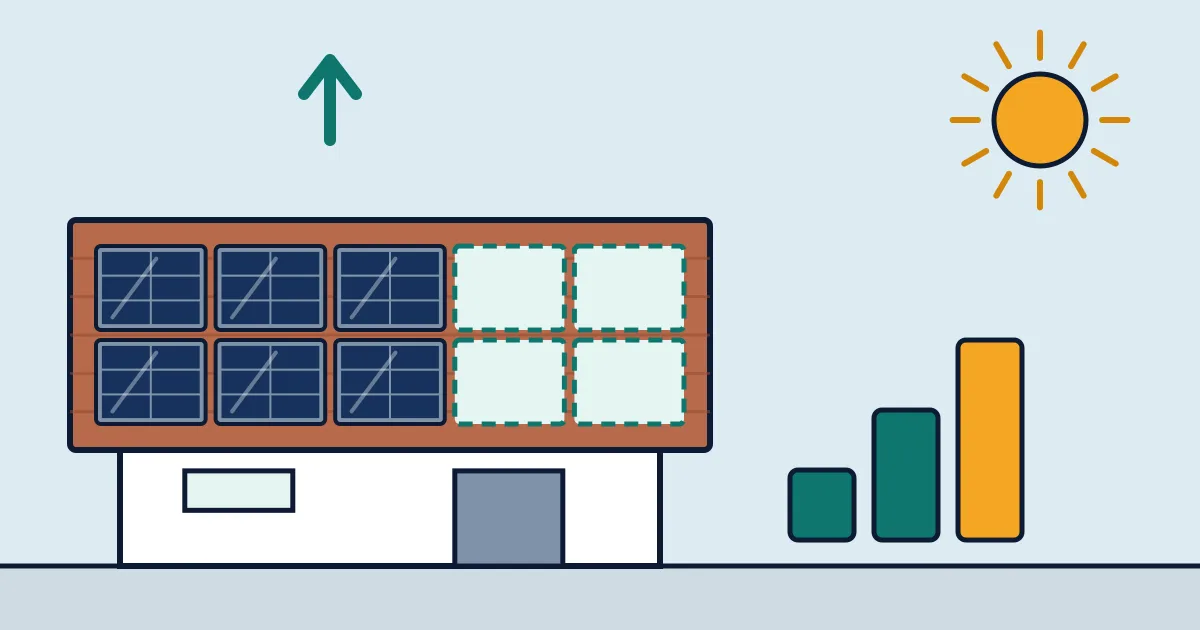
Upgrading an existing solar system typically costs between £500 and £6,000, depending on what you add. A diverter or a monitoring upgrade sits at the low end. Optimisers fitted to shaded panels cost more. Extra panels on a new string, with scaffolding, cost the most. Upgrades that involve roof work are cheaper when bundled into one visit.
Solar PV upgrade costs by type
Typical UK costs for upgrading an existing solar PV system
| Upgrade | Typical cost | What it usually means |
|---|---|---|
| Solar diverter or monitoring upgrade | £500 – £1,000 | A diverter sends surplus generation to an immersion heater. New monitoring replaces a dead display or logger |
| Optimisers retrofitted to an existing array | £1,000 – £2,500 | Panel-level electronics so shade on one panel stops dragging down the rest |
| Extra panels on a new string, with scaffolding | £2,500 – £6,000 | More panels on unused roof space, usually with a second inverter or a new hybrid |
Upgrades that combine several items, such as extra panels with a hybrid inverter and a battery, can exceed this range. Our Solar PV System Upgrades page explains each option, and adding storage is covered separately under Solar Battery Storage.
What drives the price
- Scaffolding. It is a fixed cost, so one visit for several jobs works out cheaper than separate ones.
- Existing equipment. The age, make and rating of the inverter decide whether it can take extra panels or must be replaced. See what to expect from an inverter swap.
- Feed-in Tariff or Smart Export Guarantee. If you receive a tariff, an extension has to be designed and metered so the existing income is protected.
- Network operator rules. If combined inverter capacity rises, the operator may need to be notified or asked for approval.
- Roof space and orientation. An east or west slope that was left unused is usually the best place for more panels.
- Diverter or EV integration. A diverter needs a hot water cylinder with an immersion heater, and a solar-aware charger needs a compatible EV charger.
Which upgrade fits which problem
Matching an upgrade to what is not working
| If this is the problem | This upgrade usually helps |
|---|---|
| A chimney, tree or extension shades part of the array | Optimisers or microinverters |
| You export a lot of summer generation for a low return | A diverter or a battery |
| Electricity use has grown since the system went in | Extra panels, on unused roof space |
| The monitoring has stopped working or never did | A modern monitoring upgrade |
Dig out the handover pack or MCS certificate. It lists the panel model, number of panels, inverter and installed capacity, and tells an installer immediately what they are building on. Without it, expect a survey visit before you get a firm price.
Frequently asked questions
How much does it cost to add more solar panels?
Extra panels on a new string, including scaffolding, typically cost £2,500 to £6,000. The price depends on how many panels, whether a second inverter or a hybrid is needed, and whether the existing system has a tariff to protect.
Is a solar diverter worth it?
It can be if you have a hot water cylinder with an immersion heater and export a lot of summer power. A diverter or monitoring upgrade typically costs £500 to £1,000. The saving depends on your tariffs and hot water use, so work it through with your own figures.
Can I add panels without losing my Feed-in Tariff?
Often, yes, if the extension is designed, metered and registered separately. Tell every installer you receive the tariff before they quote, and ask them to explain how the extension will be connected.
Do upgrades need scaffolding?
Roof-level upgrades such as extra panels or optimisers usually do. A diverter or a monitoring upgrade often does not, which is why they sit at the lower end of the price range.
Ready to talk to a solar battery installation specialist?
Get Free Quotes →