
What Is Solar Panel Cleaning and Maintenance?
Solar panel cleaning and maintenance is the periodic care that keeps a PV array generating close to its rated output: washing off grime, bird droppings, lichen and pollen, protecting the space beneath the panels from nesting pigeons, and checking that cables, fixings, isolators and the inverter are all in good order. In most of the UK, rain does a reasonable job of rinsing panels on a steep roof, but low-pitched arrays, homes near farmland, the coast or busy roads, and anywhere with a bird problem can lose a noticeable share of their output to dirt.
Maintenance is also about catching problems early. A cleaner working on the roof is often the first person to spot a cracked panel, a loose rail or a chewed cable before it turns into a costly repair.
Signs You Need Solar Panel Cleaning
- Visible streaks, bird droppings or a film of grime when you look at the panels from the garden or an upstairs window
- Green or yellow lichen and moss creeping in from the frames
- Pigeons landing on the roof and disappearing under the panels, or nesting debris in the gutters
- Generation that has slowly drifted down year on year, with no fault showing on the inverter
- A low-pitched or flat-roof array where water pools and leaves a dirt line along the bottom edge
Cleaning and Maintenance Options Explained
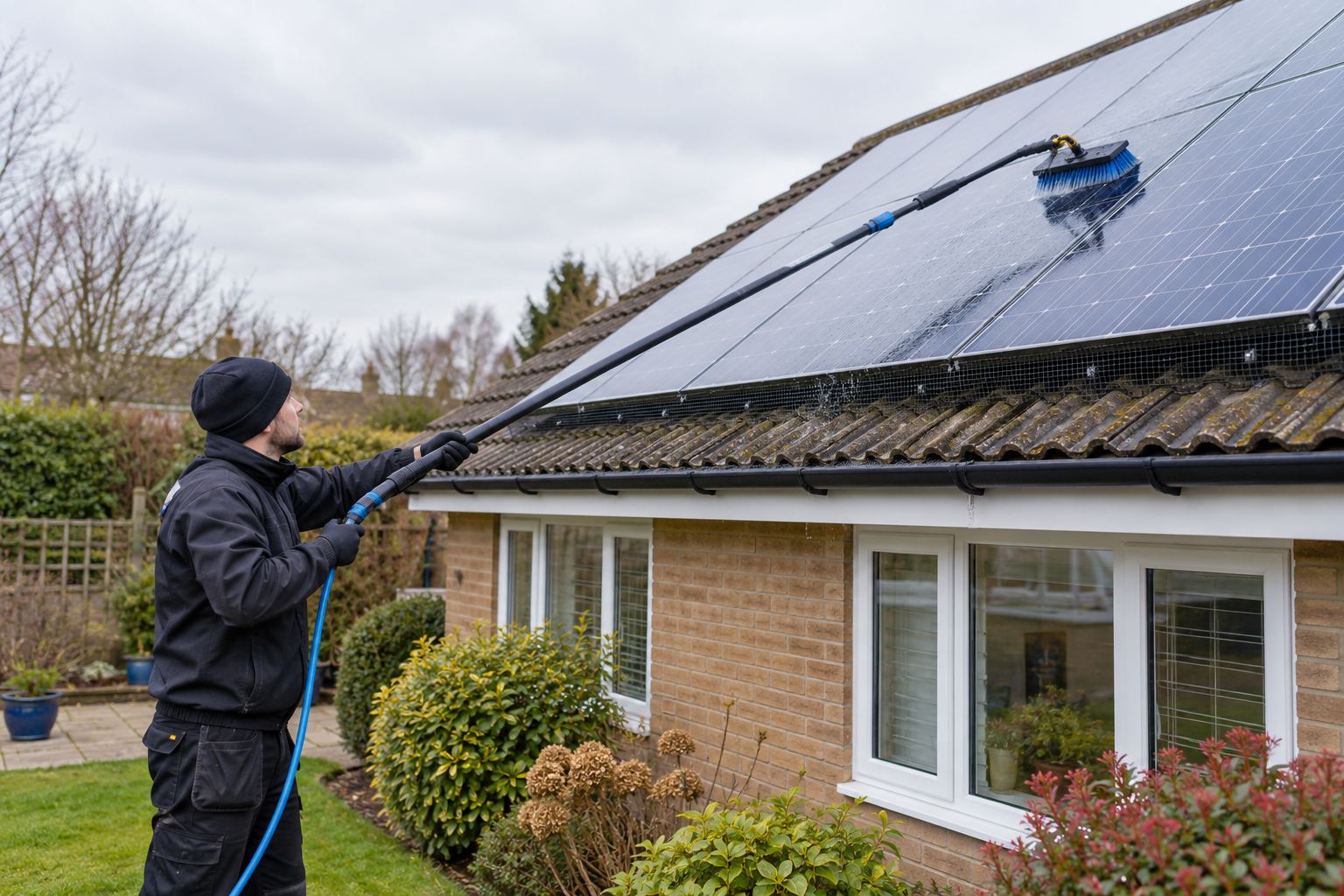
- Pure-water pole cleaning — deionised water is fed through a soft brush on a telescopic carbon-fibre pole from the ground. It leaves no residue and avoids walking on the roof, so it suits most two-storey homes.
- Roof-access or cherry-picker cleaning — used for taller buildings, steep roofs or heavy lichen that needs closer attention. Panels should never be pressure-washed or scrubbed with abrasive pads, which can damage the anti-reflective coating and void warranties.
- Bird-proofing — a galvanised or PVC-coated mesh is clipped around the edge of the array so pigeons cannot get underneath. It is fitted with non-penetrating clips attached to the panel frames, so the roof and panel warranties are not affected. Any existing nests and fouling are removed first.
- Health check — a visual inspection of panels, rails, clamps and roof coverings, a look at cable condition, and a review of inverter logs and generation against expected figures.
What to Include When Asking for a Quote
Tell the company how many panels you have and where they are: which roof slope, the height of the building (bungalow, two-storey or three-storey), and whether the ground below is a driveway, patio, conservatory or flower bed. Ground-level pole cleaning is much cheaper than work that needs a cherry picker or scaffold, so this information largely sets the price.
If birds are the problem, say whether pigeons are actively nesting now and whether droppings have built up in the gutters or on the roof below the array. Removing established nests and fouling adds time, and nesting birds are protected by law, so an active nest may need to wait until it is no longer in use. A few clear photos of the array edges help the company price mesh accurately.
Ask each quote to confirm the cleaning method and water system, whether gutters and bird fouling are cleared in the same visit, and the length and type of mesh proposed. If you want a health check included, find out what it actually covers — a visual inspection only, or testing and a generation review with a short written report.
How Much Does Solar Panel Cleaning Cost?
| Job | Typical cost |
|---|---|
| Pure-water clean, up to 12 panels, ground access | £100 – £180 |
| Clean plus health check, or harder access | £180 – £300 |
| Bird-proofing mesh with nest and fouling removal | £300 – £450+ |
Larger arrays, three-storey homes and jobs that need a cherry picker or scaffolding cost more. Many companies offer a lower price per visit for an annual cleaning plan.
The Cleaning Process: What to Expect
- Pre-clean check. The operative looks over the array from the ground or roof for damage, loose fixings or bird activity.
- Debris removal. Loose leaves, moss and nesting material are cleared from panel edges and gutters.
- Pure-water wash. Panels are brushed with deionised water and left to dry naturally without streaks.
- Bird-proofing if booked. Mesh is cut to size and clipped around the array perimeter.
- Report. You are told about anything spotted during the visit, with photos, and generation can be compared before and after.
Do I Need Planning Permission for Solar Panel Cleaning?
No planning permission is needed for cleaning, maintenance or fitting bird mesh to an existing array. On listed buildings, it is sensible to check with the conservation officer before fitting visible mesh. Work at height must be carried out safely, and pigeons' active nests are protected under wildlife law, so reputable companies will not remove a nest containing eggs or chicks — see the RSPB for guidance on birds and the law.
How to Choose a Solar Panel Cleaning Company
- Do they use a pure-water system and soft brushes, with no detergents or pressure washers?
- Do they hold public liability insurance that covers work on and around solar panels?
- How will they access the panels, and is the price fixed for that method?
- Does bird-proofing use non-penetrating clips, and what guarantee comes with it?
- Will they tell you, with photos, about any damage or faults they notice?
Frequently Asked Questions
How often should solar panels be cleaned?
For most UK homes, once a year or every other year is enough. Arrays with a shallow pitch, near farmland, trees or the coast, or with a bird problem may benefit from more frequent cleaning.
Does cleaning solar panels increase output?
It can, especially where panels are visibly dirty or fouled by birds. The gain varies widely, so comparing generation before and after the clean is the best way to judge whether regular cleaning is worthwhile.
Does bird mesh damage solar panels or the roof?
Properly fitted mesh uses clips that attach to the panel frames without drilling, so it should not damage the panels, the roof or affect warranties.
How much does solar panel cleaning cost?
Most cleaning and maintenance jobs cost between £100 and £450, depending on the number of panels, access and whether bird-proofing is included.